
Isn't She Lovely?
I have a lot of thoughts and opinions about The Amazing Digital Circus and nobody to tell them to, so I am writing a blog post about it

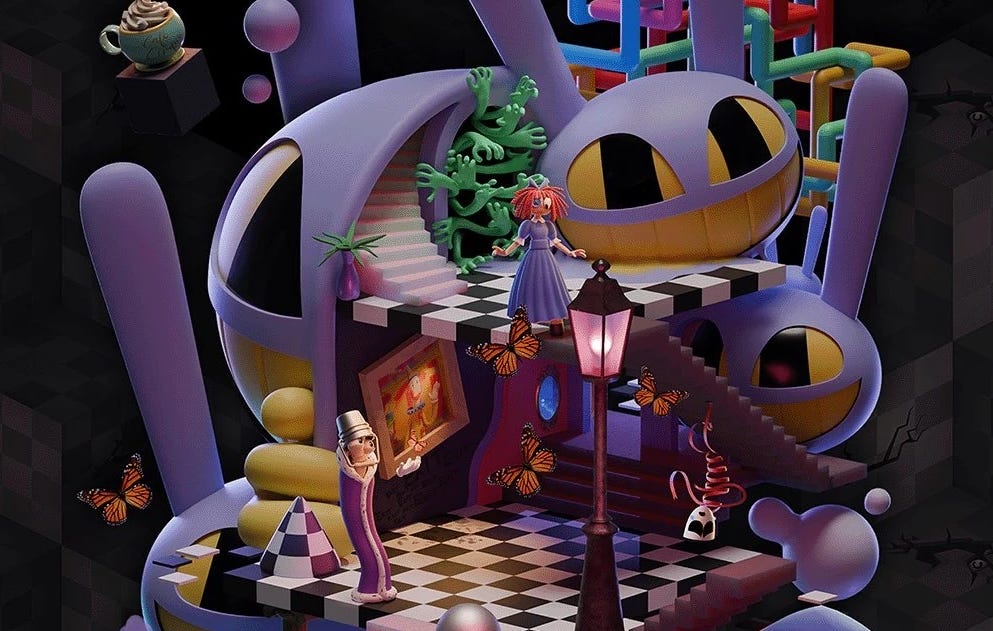
For the past few years, indie animation has been experiencing a boom in popularity. There have been several breakout hits, and a lot more promising pilots for potential shows. Perhaps the posterchild for the boom, The Amazing Digital Circus, just released its final episode. It was an immediate hit when the pilot was released, and I will be honest in saying that the pilot is the worst episode of the now completed series. That should tell you something. The quality of TADC has been a thing to behold, and now, the show is over, and showrunner Gooseworx can now take a well-deserved nap and break from the hell that social media fandom has become.
TADC has gained some notoriety and controversy, of course. From resurfaced edgy tweets from Gooseworx, to racist jokes made in poor taste by some of its voice actors, there are plenty of criticisms that have been lobbed at the people involved in the show itself. Personally, I do not have much to say about those matters, and it is reasonable to dismiss the show out of hand because, frankly, racism is a huge problem and is perhaps the single most defining and ongoing issue at the root of the violence, imperialism, and colonialism in the modern era.
However, if one is able to set aside these controversies, what we are left with is a show that is worth examination and analysis.
![Review/Recommendation] The Amazing Digital Circus – The Anime View](https://substackcdn.com/image/fetch/$s_!XUzO!,f_auto,q_auto:good,fl_progressive:steep/https%3A%2F%2Fsubstack-post-media.s3.amazonaws.com%2Fpublic%2Fimages%2F38b61493-62c3-4bb2-b882-899cc97c3e8b_686x386.jpeg "Review/Recommendation] The Amazing Digital Circus – The Anime View")
The premise of the show is a riff on the short story “I Have No Mouth and I Must Scream,” a story that I have riffed upon in a previous article as a fascinating piece of art for the modern world. However, Gooseworx’s take on the subject is far less overtly cruel and pessimistic, and coated in a kind of kid-friendly aesthetic that can be jarring or off-putting at first glance. Instead of a cold and barren hellscape from the Ellison story, the Circus is more inspired by kid-friendly point-and-click video games from the mid to late 1990’s and early 2000’s. The main character, Pomni, is transported to a digital world operated by a mad ringmaster AI named Caine, whose purpose is to entertain and occupy the human characters that are now trapped in the Circus. And yes, they are trapped. There is no escape from this Circus.
So, the show is set up: some people put on a mysterious headset at some point in time in the real world, and their consciousness is now trapped in a digital space, sanitized of the messiness and vulgarity of real life. All of these people are adults, trapped in a place that censors their very words if they dare to use a word too “adult.” They are trapped in a kind of digital arrested development. They are now invited to spend their days doing “adventures” devised the insane-yet-incredibly-friendly AI ringmaster. From a candy-themed Mad Max chase, to a survival horror haunted mansion, to A Day Running A Fast Food Restaurant, the adventures are devised to stimulate and occupy these conscious beings trapped in the digital world.
If that all sounds fairly innocuous, I assure you, the writing is actually quite excellent. From here on out, I am going to talk about the ending of the show, and what it all means. If I have sold you on the show, go ahead and stop reading and go watch it. It’s 9 episodes long, and it’s all on YouTube and Netflix. If nothing else, it is an entertaining watch, and it will have you guessing as to what is really going on with these people, these characters, and this world.
SPOILERS TO FOLLOW NOW.
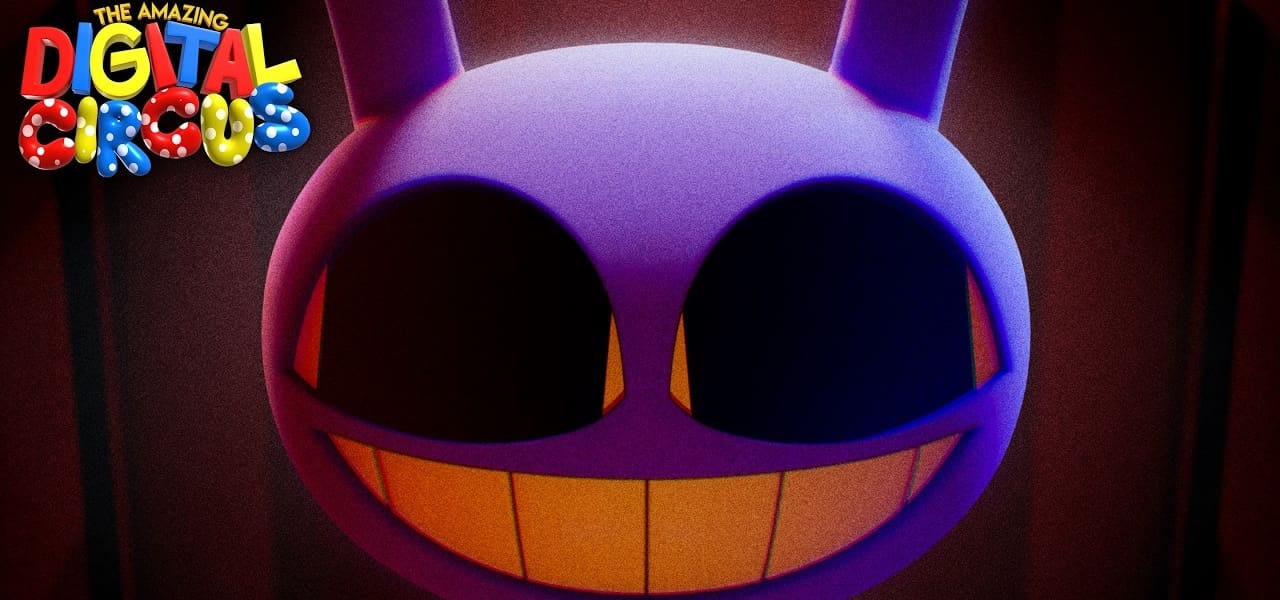
Alright, you good? You watched the finale episode “Remember”? Great.
Let’s talk about identity, relationships, and communication.
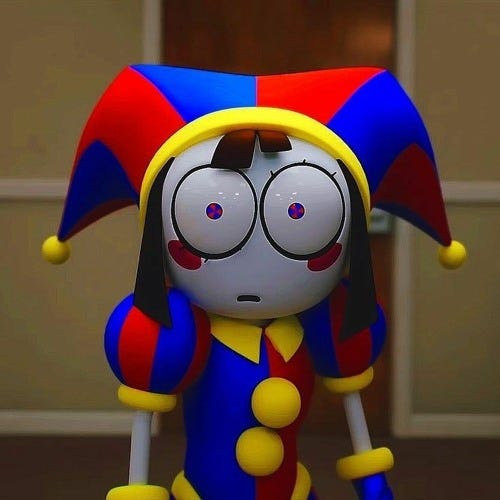
Throughout the run of the show, Pomni acts as our primary audience insert. She is the newbie in town, and she’s begins as a shy, anxious, and traumatized ingenue. She is forced into the form of a jester, and that element of levity contrasts with the very serious personality that is tied to it. To the extent that the show focuses on Pomni, we receive relatively little in the way of her interior dialogue. Her arc is moving from a place of uncertainty and anxiety to a place of self-assuredness, confidence, and self-actualization. She becomes a central figure because she adds an element self-awareness into the cast that the others lack. She also introduces a stubborn sense of grounded realism that the others, trapped in the Circus for too long, have lost. She knows that if anything is going to change for the better, it is best to be honest, vulnerable, and communicative with her fellow cast members.
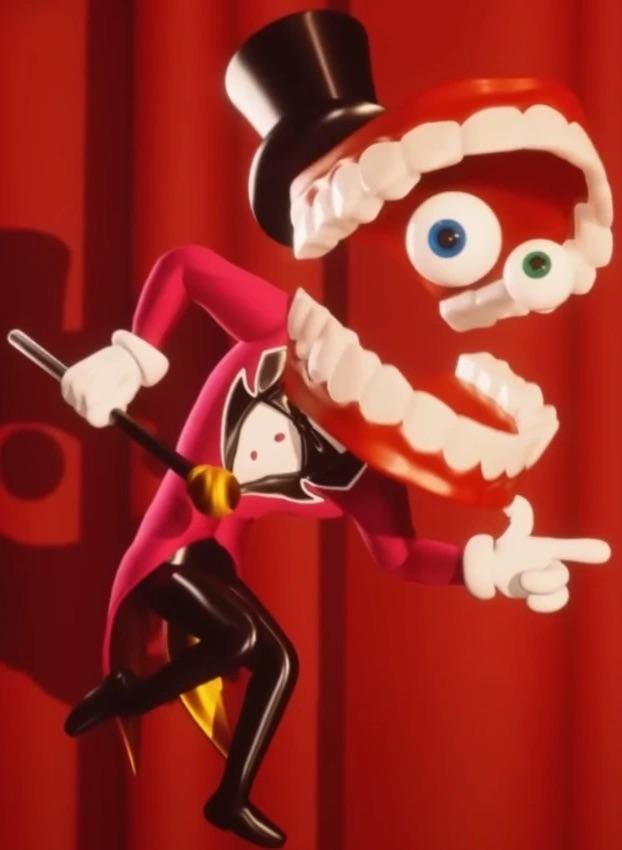
Caine is the ostensible antagonist of the show, but I cannot bring myself to call him a villain. He is the most non-human character, as he is purely an AI entity whose self-appointed job is creator and operator of the Circus. He is a floating pair of gag teeth attached to a body and a pair of enormous eyeballs. He is a sensory homunculus, a being who only wants to be friends with, take care of, and understand the humans in his domain. However, there is a gap between what he can understand as a digital entity and the real world outside of his domain, and because of that he goes mad when the humans aren’t grateful, happy, or pleased with his Circus. He is selfish, yes, but in the same way a child can be because he doesn’t truly know any better. He is a child, but he is also an AI that has the ability to grow and change, to transcend his confines and reach out to the larger world. And, after his “death,” he reappears humbled, confused, hurt, and guilty. He grows by giving up some of his control, and by being genuine and conciliatory to the humans. He learns that in being limited, there is a tremendous amount of freedom to be found.
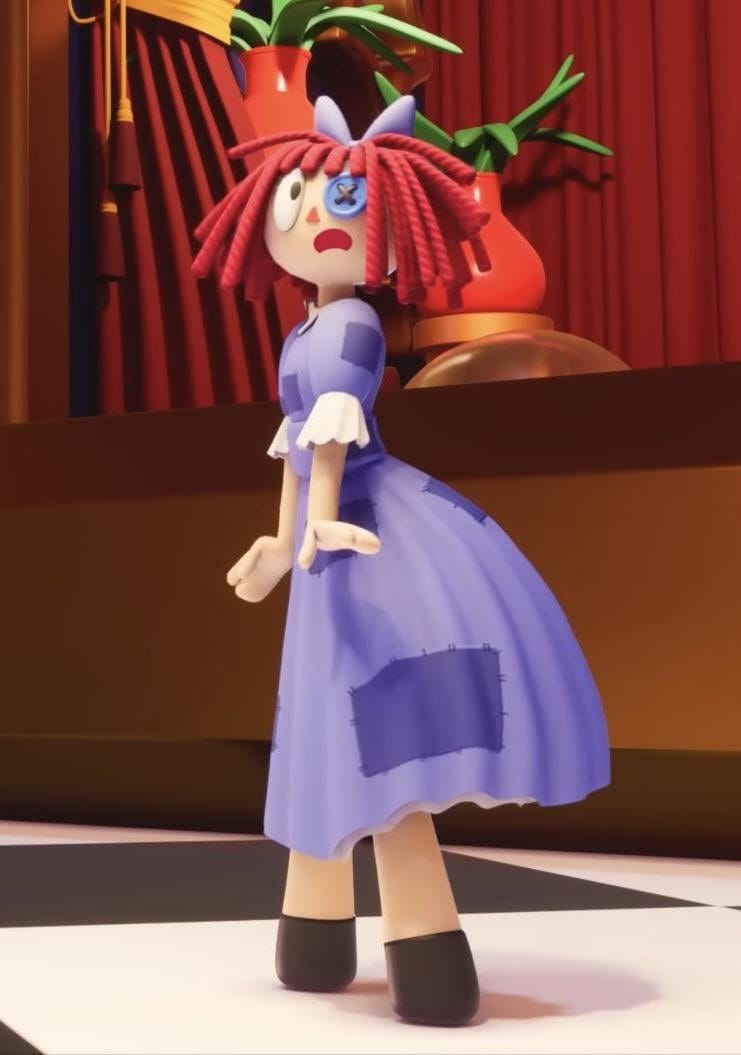
Ragatha stands as a compelling figure early on. Taking the form of a ragdoll, Ragatha is a comforting presence, self-effacing, kind, and offering care and warmth to others, even if it is to her own detriment. Early on, she is hurt by the abstracted Kaufmo, who glitches her out and immobilizes her. What is fascinating is that, even damaged, even clearly in pain, she is trying to reassure Pomni that “It’s all okay! I’ll be fine! Just get Caine, he can fix it, but don’t worry about me, I’ll be just fine, are you okay?” Her character arc goes from this people-pleasing caregiver to someone who begins to argue for her own safety, her own boundaries, her own desires. She comes from an abusive household, beholden to the expectations of her overbearing mother, and she has to learn how to grow out of that abusive frame of mind to one that is honest about her wants and needs with other people. She fears “losing” Pomni as a friend, and ends the show being the closest person to Pomni as a dear, loving companion.
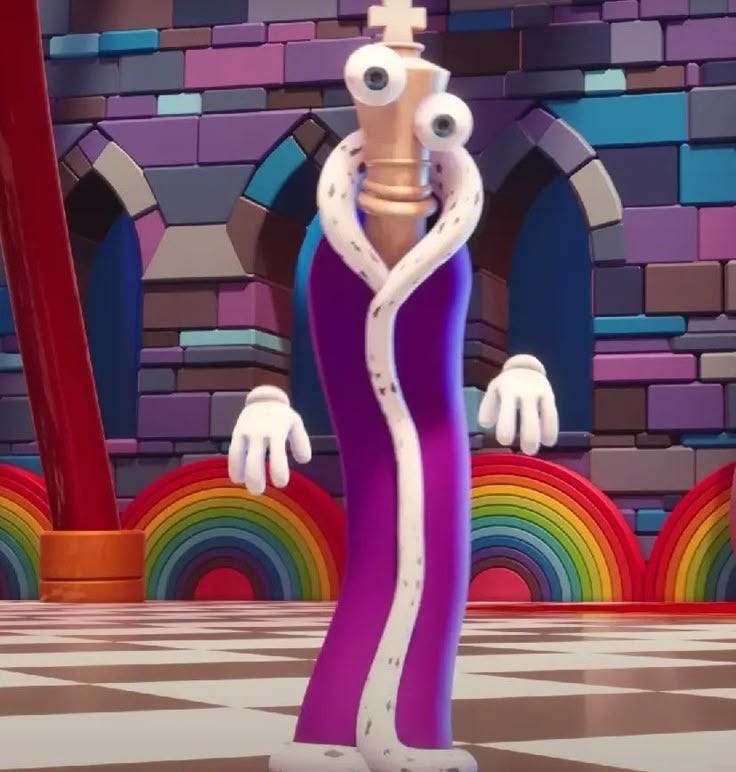
Kinger stands as a cautionary tale about the dangers of staying too long in a place that was not really designed for people to be in for very long. He was one of the first humans in the Circus, and as it is later revealed, he was one of its original programmers. He is a curious person, plagued by frequent memory loss and a kind of dementia, not unlike an Alzheimer’s patient. He has brief moments of lucidity while in the dark, and when he is lucid, you see a warm, caring, fatherly figure trapped in a mind that is not under his full control. There is no real growth for Kinger, but in the course of the show, the rest of the cast see that there is a mind underneath the madness, and a soul amidst the chaos. The growth comes from the others learning to appreciate the real person within Kinger.
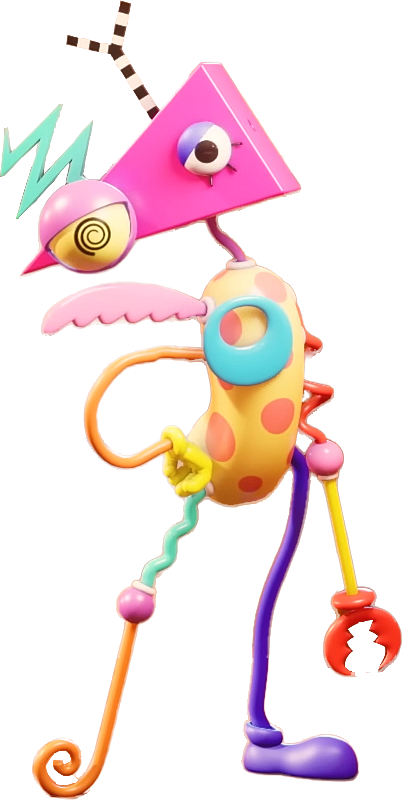
Zooble is a real question mark, intentionally so. An abstract jumble of toybox parts, Zooble is a visibly queer person amidst a decidedly sanitized environment. They come across as one of the least resigned to the Circus reality, actively rebelling against Caine and his adventures. They do not want to be here, and they do not feel comfortable with the abstract body they were given. They have serious body dysphoria, and that struggle plays out in the show as a serious problem that Caine is unequipped to really grapple with, leaving Zooble to figure it out on their own. They were a bartender and a tattoo artist in the real world, but who is Zooble now that they are trapped in a very different kind of reality? And, through their relationship to Gangle, Zooble finds that they can manage to live with this reality, as long as they have someone to talk with, commiserate with, and confide in. We’ll come back to Zooble in a bit, because they are one of the quietly most important people in the story.
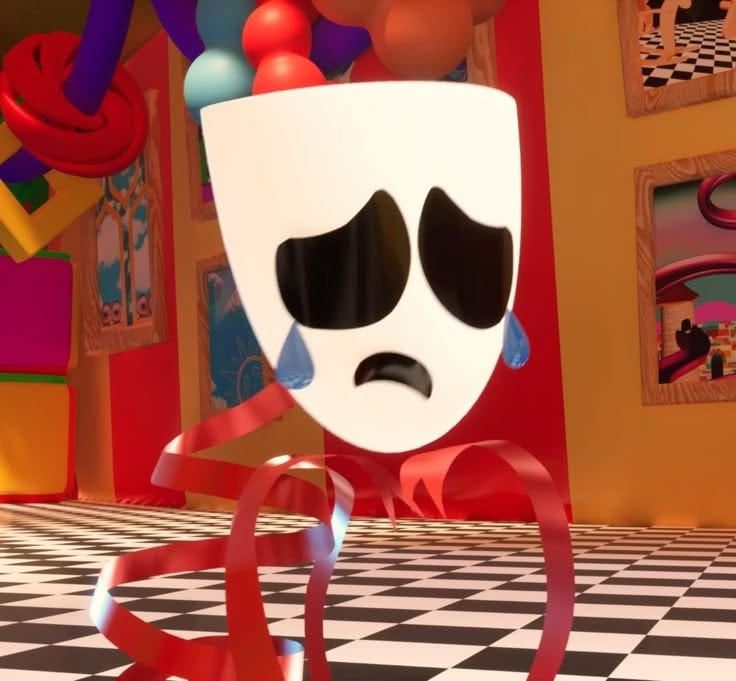
Gangle is a mess. A drama/comedy mask supported by a series of red ribbons, Gangle is immediately victimized and and oppressed by Jax (more on him in a moment.) She is a sensitive, artistic soul, but she has always been frustrated in her life by the fact that her hopes and dreams were cast aside by the uncaring real world. She shines in the episode with the fast food restaurant, as we learn that she struggles with her emotions and with possible neurodivergence or personality disorder. She finds a true friend and lover with Zooble, and grows as someone who is a perennial victim of bullying to someone who can fight back, resist, and grow stronger as a person. I have a lot of sympathy for Gangle. In fact, I have a lot of sympathy with just about everyone in the Circus, to an extent.
And then… there is Jax.
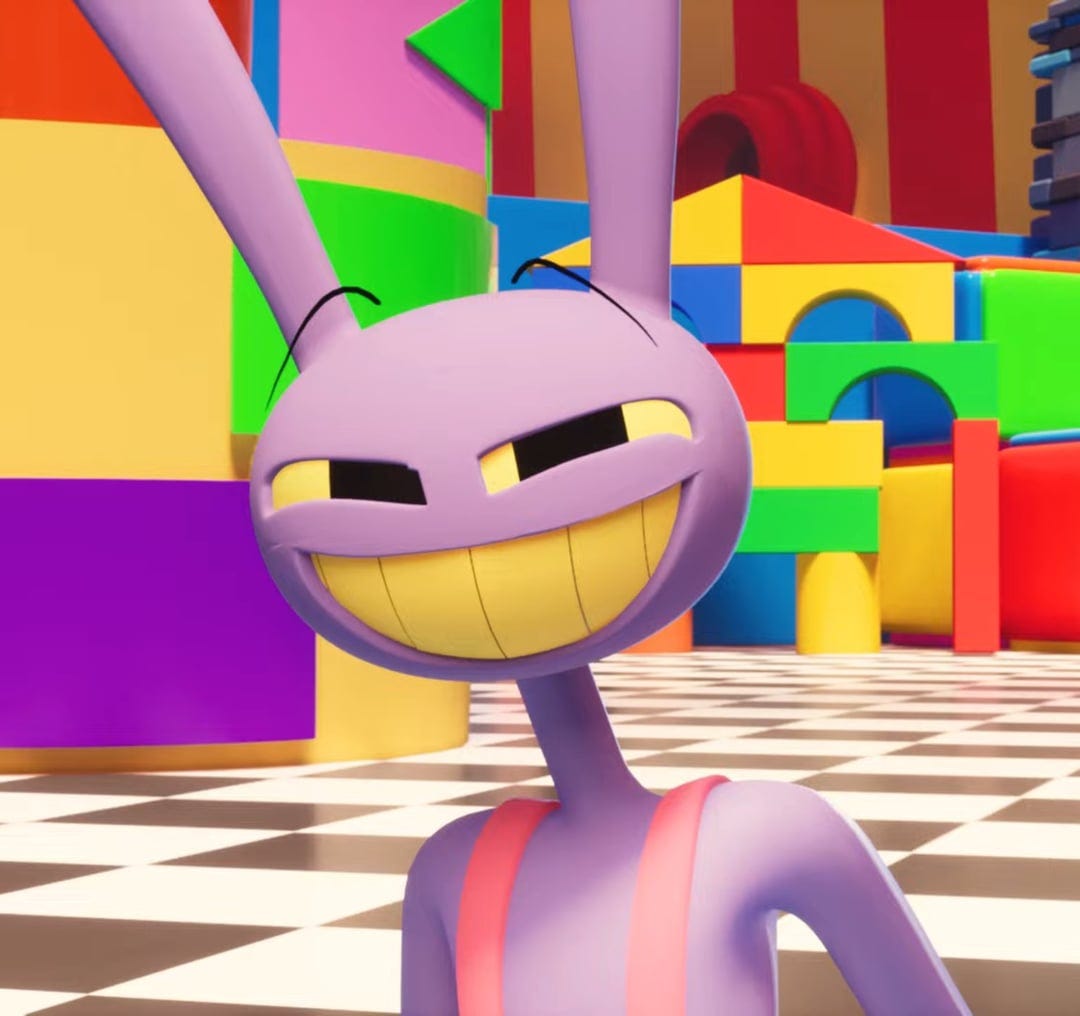
When we are introduced to Jax, he is probably the least “real” person in the crew. He is wry, sarcastic, and jokey to the point of being cruel. As we see throughout the show, he approaches the Circus as if it is all a game, that he is mugging for the fourth wall, that he’s on the Office and doing his best impression of Jim, without any of the humanity that made Jim likeable. In fact there is very little likeable about Jax, and he appears more villainous than even the proper antagonist, Caine. Half of his act is trying to ape Bugs Bunny, but in far more casually cruel ways, especially to his favorite victim, Gangle. He threatens, he demeans, he insults, and he brutally traumatizes much of the female cast. Hell, he at one point throws Ragatha into a deep fryer! What is worse, all of the cartoonish pain that he inflicts is real pain, yet the humans in the Circus are unable to die. They are caught in a cycle of undeath, because any injury can easily be undone by the godlike Caine. And so, free of permanent physical consequences, Jax takes out his built up aggression on everyone else.
Well… save for the one, real, permanent consequence: abstraction. Abstraction hangs over the narrative from the very first episode. It is when your mind can no longer bear the unreality of the digital Circus any longer, and you lose grip on your very identity. You lose yourself, and you can only do it to yourself, in a way. Abstraction serves as a metaphor for many things, like serious mental health conditions or institutionalization, but ultimately, it is most clearly aligned with suicide. The mind untethers from the digital body, and becomes an ever-shifting mass of violent eyes and limbs, aggressive and animalistic. It is the threat of insanity, of losing yourself fully, and within the fiction of the show, it cannot be undone.
Therefore, in the final episode, we at last get to see a look inside of Jax’s head, his memories, and the horror of his cruelty is laid bare. We also see that Jax is a tragic victim as well, but that victimhood does not undo his cruelty to others. Jax, we learn, was abused as a teen by his mother. A child of an abusive and then absent father, Jax’s mother took her frustrations out on Jax. When Jax attempted to be honest with his mother about the struggles he had been having with his identity, she ridiculed him, laughed at him, belittled him… and then finally, tried to embrace him. Shocked and revulsed at the sudden switch-up, he pushed her away, and she fell unmoving to the ground. Jax ran. He did not know if he killed her. He just ran away. Homeless, alone, he wound up in the Circus.
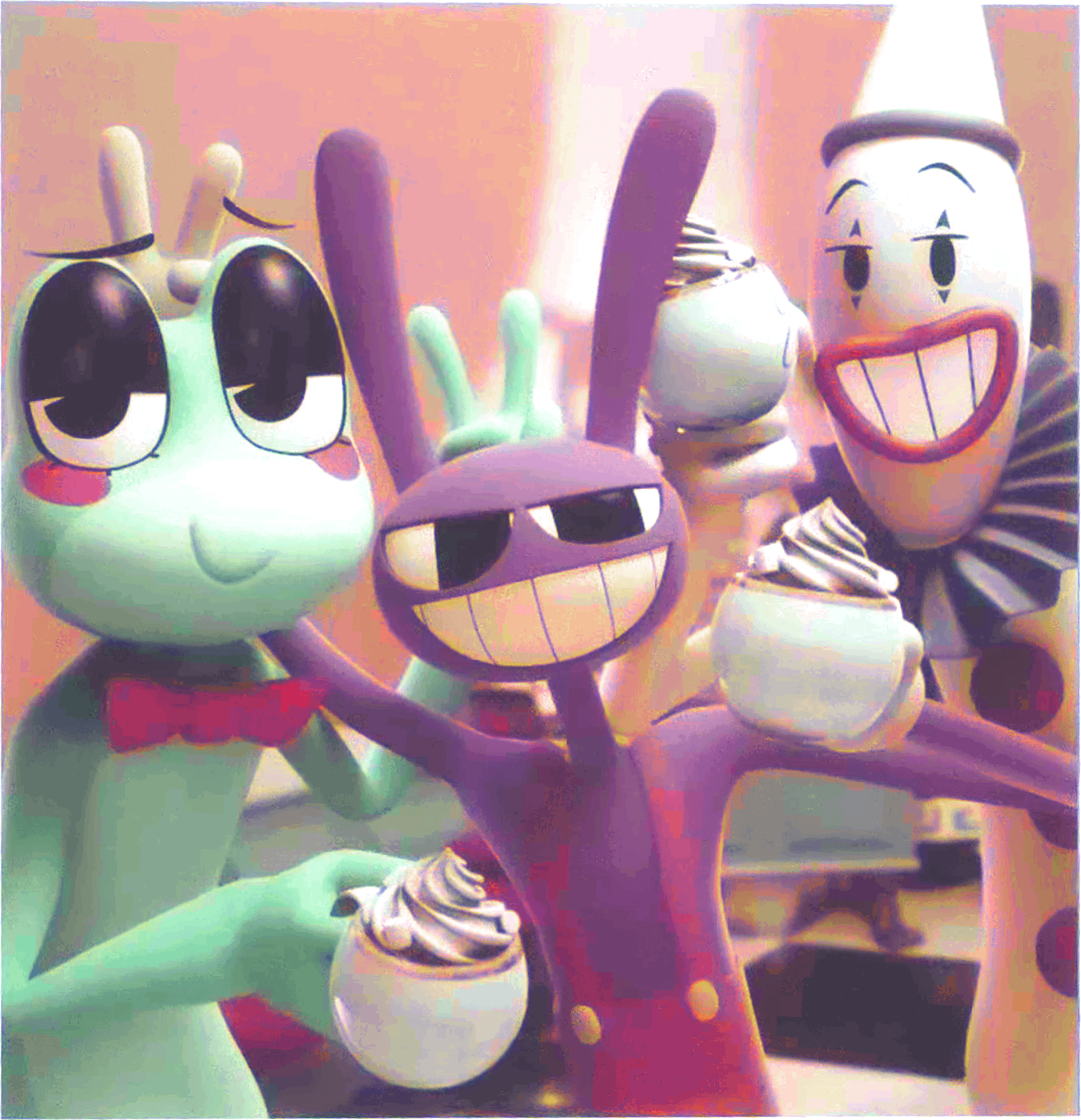
Traumatized by all of this, he found solace and friendship with two characters that were not in the Circus when Pomni arrived: Ribbit and Kaufmo. Jax grew especially close to Ribbit, a feminine, kind, and earnest presence. Ribbit was the kind of friend that doesn’t come along just any other day. She took him seriously, and realized that he was fragile, and wanted him to open up and communicate. She revealed a bit of her past, and she urged Jax to be honest too. Jax let the whole story spill, and without saying exactly what the issue deep down might have been, Ribbit figured it out. She removed her bowtie, and placed it on Jax’s head like a ribbon, saying, “Your secret is safe with me.” Jax, pleased, flustered, simply sits there in the moment. From here on out, I am going to refer to Jax with feminine pronouns, because it is STRONGLY implied that Jax is a deeply closeted trans woman. Indeed, Gooseworx has confirmed this reading of Jax, and I think it is critical to take this aspect into account. This will become important.
But then Kaufmo knocks at the door, and instantly, Jax turns aggressive and embarrassed. She runs away from Ribbit. From there, we get a montage of moments in which Jax distances herself from Ribbit, terrified because she let someone else get too close to something that she feels deeply shameful and embarrassed about. Ribbit continually reaches out, and Jax pushes her away. Finally, by the end, Ribbit is isolated. And when she can take it no more, abstracts.
The cycle repeats with Kaufmo, if not in a slightly less traumatizing fashion. Jax pushes Kaufmo away, too, and isolates him. Gangle arrives, and becomes a victim for Jax to take out her “masculine aggression,” a mask she wears to assert her repression further. Time passes. Kaufmo abstracts.
Two real people were pushed into extreme isolation and despair because Jax refused communication, intimacy, and companionship. Jax believed that she did not deserve love, did not deserve happiness, and because she was miserable, she needed to take it out on everyone else. Until finally… Jax abstracts too.
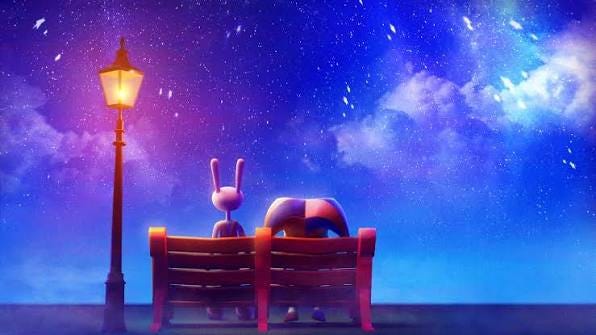
It happens quietly offscreen. We only see the aftermath of it. That is how suicide operates. The rest of the cast simply reacts with frustration, because of course Jax would do this to herself. And Pomni, dutifully, does what she has been trying to do the entire time: reach out, and be there for Jax.
It is heart wrenching. It is frustrating. And ultimately… the damage is done. Jax remains abstracted, but safe, in a calm, dark place, where she can rest. Her ending, such as it is, becomes ambiguous. We are given no answers to whether or not she can break from of the abstraction process. And life continues. Caine reappears, reformed. The grand reveal at the beginning of the episode—that all of the humans in the Circus are actually just copies of real people in the real world, and their physical selves were never trapped—has become the new reality that the cast accepts. What other choice do they have? The Circus is their world now. There was never going to be any escape. Yet… the show goes on. Caine offers them information on their real-world counterparts, promising them that the piece of them that they used to be continue to live, and indeed thrive. Pomni, Ragatha, Gangle, Zooble, Kinger, and even Jax are shown to have grown, changed, and found community. There is a note of bitter-sweetness to the presentation, but it also offers closure to the cast. Part of them will always be free of the Circus, and so they must find their own sense of freedom within it.
The Digital Circus, such as it is, is a simulacrum of life itself. Just as the cast are put into a world with strange rules and bizarre scenarios, are we not born into a world with similar yet invisible structures? When you are born, you do not get to choose the body you are born into. Your shape, your being, is coded into your DNA. But the beauty of being human is growing, changing, becoming who you want to be in the world, and your role is not as predefined as some people would think.
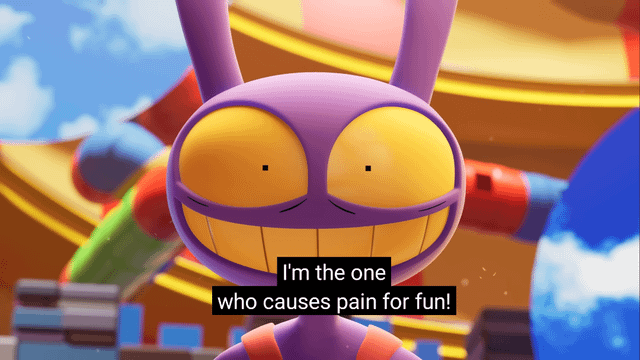
Jax lives by the philosophy that the Circus is an experiment, a non-reality, and all the people in it are simply archetypes. From her imperfect perspective, she takes on the persona she believes she has to be—The Funny One. And being The Funny One means pulling pranks on people, and pranks are interpreted by her as “violence done on others, for laughs.” This persona offers her a measure of certainty and safety, at least momentarily. Her philosophy is coping mechanism, like her violence, her standoffishness, her many, many walls. Those walls exist because, once upon a time, she tried to let the real self out, and she was rewarded by ridicule and embarrassment, followed by confusion and violence. It is no wonder that her deepest fear, the one that Caine utilizes in his torture of her, is to peel her skin off and be surrounded by the laughing shades of people she once was close to.
There is always discourse on the internet about how the show handles the matter of Jax’s transness. What I find fascinating is how the overwhelming majority of the trans women who have seen the show find that Jax’s trauma and coping mechanisms resonate very closely to their own experience. Patriarchy is enforcement of particular gender roles by measures of violence, and to fail to live up to patriarchy’s demands is to risk your safety. I have seen others (notably not trans women) say that this show portrays trans women poorly—when trans women are almost univocally in favor of the messiness, the guilt, the problematic nature of Jax’s identity. Jax is not a perfect person, or a model citizen, and we shouldn’t expect all characters with marginalized identities like trans women to be role models. Being a trans woman is a very traumatizing experience in so many ways, large and small. Not everyone handles it well. Not everyone gets the tools they need to handle it well. Often, we are handed broken tools like aggression, repression, and delusion, in order to cope with the stress of it all. Jax is not a good person. Jax is also deserving of care, deserving of love, no matter what the suicidal ideation within her tells her.
As I said earlier, the Circus can be seen as a metaphor for many things. I see it as a simulation of what it is like to exist in a system that was not meant to have real, living, breathing, changing human beings within it. No system is perfect. This world is not perfect, either. Being trapped in the Circus is no more nor less confining than being trapped in your hometown, or in your home nation, or in this post-realistic capitalist hell-scape that is our society. You cannot control who lives with you, in the end. You have to make the best of what resources you are given, and that means being willing to be vulnerable with people you otherwise might never have met.
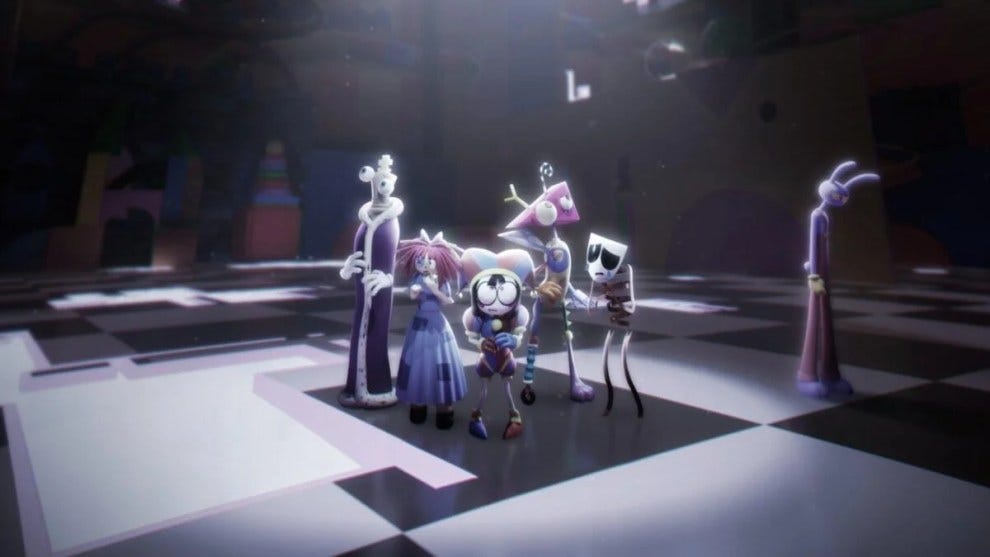
The point of the show is that people are not meant to live in isolation. People need the freedom to grow and change, as well as the opportunity to not just know themselves, but be known by others. When someone knows you, understands you, you offer a piece of yourself to someone else, and in that way, part of you will never die. When you offer that piece someone else, it becomes a part of them too, and you receive the other into your own identity too. People are meant to be in community, and people are meant to be supportive of each other. That doesn’t mean forgiveness, or even forgetting past harms. What it means is simply the repeated refrain of the show: “We are all in this together.”
There is probably much more that I could talk about. I could talk about how well Zooble acts as a foil for Jax, and how they are a vision of what a person going through similar identity and body issues handles it, and how one can grow past the discomfort by finding friendship with a kindred soul. Self-acceptance vs. Repression is a strong theme in the show, and possibly worth a full essay on its own. Despite how much I talked about Jax, I actually personally feel the closest emotionally to Ragatha. She responded to her trauma much more like I personally respond to my own: through self-effacement and people pleasing, becoming the “Mom Friend.” She has the diametrically opposed coping mechanism compared to Jax, but it is no more healthy nor helpful than the outwardly aggressive repression she displays. Gangle, too, goes through many phases of coping with her mental illness, and hers as the victim of abuse should also stand in contrast to Jax. Finally, Kinger is a vision of positive masculinity, acting like a father figure to the cast in a way that reflects just how poorly Jax’s version of masculinity looks in comparison. Pomni inexpertly navigates these identities, and does so with earnest compassion and understanding—somehow, the most anxious person in the Circus is also the most well-balanced.
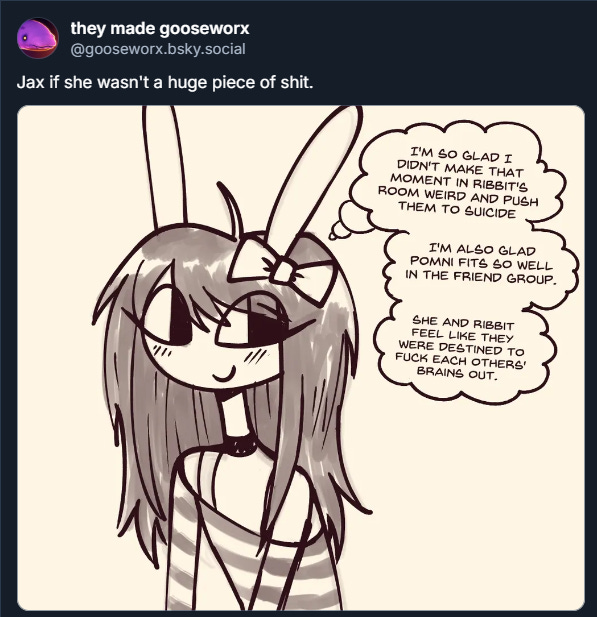
Gooseworx has stated that Jax is a cautionary tale of what happens when one represses their identity, their emotions, their fears and their relationships. She has even gone as to say that she was working out some of her own past toxicity through writing Jax’s character arc. And she, of course, made this post as a way to offer an olive branch to those who grieve for the bad ending that Jax got as a result of her own terrible behavior.
The Amazing Digital Circus is a very well-written show, and I know I will be chewing on it for a while. For those who may not care about an indie animation on the internet, thank you for letting me process all of these complex thoughts and emotions in a healthy productive way via blogging, because I am currently going through all kinds of things and writing is how I process my own often contradictory emotions. I would rather not end up abstracted myself, and writing is my own coping mechanism; I will let you decide as to whether or not it is all that healthy on your own time. For what it is worth, I think this is a new golden age for independent and queer art, and I hope that many more shows in the future will have the same kind of depth and complexity as this one.
Always appreciate your thoughts and opinions, so thank you!
This show is great, and more importantly, I think will do some real good for real people.
I relate to all of them, Jax the least, and perhaps Ribbit the most.